






Front Suspension Parts: Diagnosing Uneven Tire Wear and Steering Instability
Front Suspension Parts: Diagnosing Uneven Tire Wear and Steering Instability
Uneven tire wear and unstable steering rarely begin as “tire problems” alone. In heavy-duty trucks, they are often the visible result of wear, looseness, distortion, or incorrect geometry in the front suspension parts and steering system. A driver may report that the truck drifts on a straight road, needs constant steering correction, feels vague after hitting bumps, or develops a steering-wheel vibration at highway speed. By the time these symptoms become obvious, the tire tread may already be carrying an expensive record of what has gone wrong underneath.
For aftermarket maintenance personnel, the challenge is not simply finding a worn component. It is determining which fault is the root cause, which related parts have been affected, and whether the truck can return to service without quickly damaging its replacement tires. This is especially important for trucks operating with heavy payloads, uneven loading, rough construction access roads, repeated curb contact, or long-distance highway duty.
A disciplined inspection of front suspension parts, steering linkage, axle alignment, wheel bearings, and tires can turn a vague complaint into a practical repair plan. The following guide focuses on the patterns worth reading, the checks worth performing, and the replacement decisions that prevent repeat failures.
Read the Tire First—It Often Points to the Fault Area
Tire wear is not a complete diagnosis, but it is an excellent starting point. Before lifting the axle or removing any components, inspect both front tires side by side. Compare inner and outer shoulders, feel the tread surface with a gloved hand, and note whether the problem is isolated to one wheel or appears across the axle.
- Outer shoulder wear may indicate excessive positive camber, aggressive cornering, bent axle geometry, or suspension movement that changes wheel position under load.
- Inner shoulder wear is commonly associated with excessive negative camber, incorrect toe settings, axle or steering component damage, or worn mounting points.
- Feathered tread, where one edge of each tread block feels sharp and the other smooth, often points to incorrect toe or play in steering linkage components.
- Cupping or scalloped wear can result from wheel imbalance, poor damping, loose wheel bearings, worn kingpins, or looseness in suspension joints.
- Localized flat spots may be linked to braking events, but they can become more severe when steering instability prevents consistent tire contact with the road.
Do not make the common mistake of assigning every irregular wear pattern to wheel alignment. Alignment settings only remain valid when the axle, springs, bushings, steering gear, tie rods, drag link, kingpins, and wheel bearings are mechanically sound. Setting toe on a truck with excessive joint movement may improve readings in the workshop while doing little to protect tires on the road.
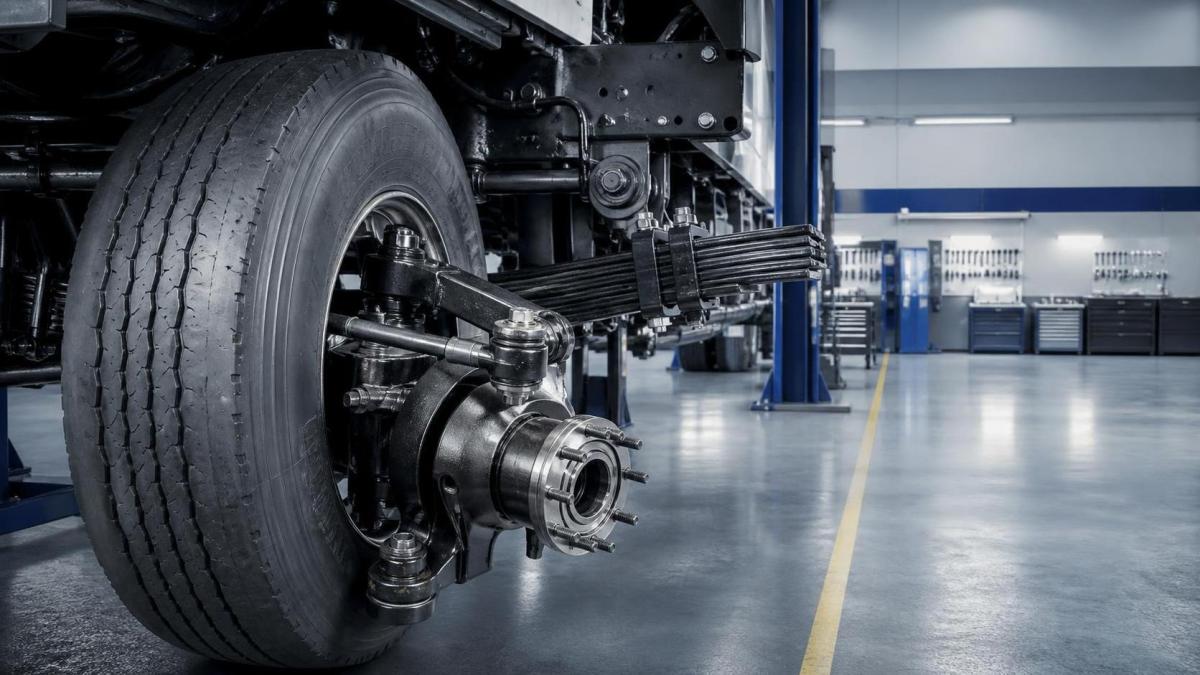
When Steering Feels Loose, Separate the Steering System From the Suspension
Drivers often use the phrase “loose steering” for several different sensations. A truck may wander because the steering gear has excessive internal clearance, because a drag link end moves under load, or because worn front suspension parts allow the axle to shift relative to the chassis. The repair approach changes depending on where the movement originates.
Start with the vehicle on level ground and the wheels pointing forward. With an assistant moving the steering wheel gradually from side to side, observe the system from the steering gear output through the pitman arm, drag link, steering arms, and tie rod. The key is to watch for delay: if the steering wheel turns but a downstream component does not move immediately, the clearance is likely located before that point.
Then inspect the relationship between the axle and frame. Leaf spring eye bushings, spring pins, U-bolts, shackles, and suspension brackets deserve close attention. On heavy trucks, a small amount of movement at a heavily loaded axle can produce a noticeable change in tracking direction. Loose U-bolts or damaged spring seats can also allow axle shift, making the truck pull or steer differently under braking, acceleration, or load transfer.
A useful practical distinction is this: steering-linkage play is generally visible while the steering wheel is being moved; suspension-related movement may become more obvious when the axle is loaded, when the brakes are applied, or when the vehicle crosses uneven ground. Both conditions can exist at the same time, particularly on trucks that have continued operating after early symptoms appeared.
A Workshop Inspection Sequence That Avoids Missed Causes
Random part replacement is costly, and it can leave the original complaint unresolved. A repeatable sequence helps technicians identify whether the truck needs a single component, a connected set of parts, or an alignment correction after mechanical repairs.
1. Confirm the complaint during a controlled road check
Where workshop procedures permit, note whether the truck pulls only under braking, wanders continuously, reacts sharply to road grooves, or develops vibration at a particular speed. Check tire pressures and confirm that both front tires are comparable in size, construction, and remaining tread. Mismatched tires can imitate steering and alignment problems.
2. Inspect the tires and wheel assemblies before measuring alignment
Look for sidewall damage, separated tread, missing balance weights, damaged rims, and uneven inflation. Raise the front axle safely and check each wheel for free rotation. Grasp the tire at the top and bottom, then at the sides, to identify play. The direction of play can help distinguish a wheel bearing issue from kingpin or steering linkage wear, although further confirmation is always needed.
3. Check kingpins, bushings, and axle-end components
Kingpin wear is a frequent contributor to irregular front tire wear on heavy-duty vehicles. Excessive clearance allows the steering knuckle to move in ways that change camber and toe during operation. Look for vertical or lateral movement at the knuckle, damaged seals, poor lubrication history, and signs that grease has escaped or contaminants have entered.
Inspect thrust bearings, kingpin bushings, steering knuckle bores, and related retaining hardware as a system. Replacing only one visibly worn item without evaluating the mating surfaces may lead to short service life. If the steering knuckle bore is damaged or out of condition, a new kingpin alone may not restore correct fit.
4. Examine springs, bushings, U-bolts, and brackets
Front leaf springs should be checked for cracks, shifted leaves, broken center bolts, uneven arch, corrosion damage, and contact marks that suggest movement. Worn spring eye bushings or shackle bushings can let the axle move fore and aft, changing caster behavior and causing wandering. A broken or weakened spring can also alter ride height and geometry on one side.
Inspect U-bolts for corrosion, stretched threads, damaged nuts, and evidence of clamp movement around the axle seat. Torque must follow the vehicle manufacturer’s service procedure. Reusing questionable fasteners simply because they still appear intact can compromise the repair.
5. Assess steering gear and hydraulic assistance
If all linkage and suspension joints are in acceptable condition but the steering still feels delayed or inconsistent, inspect the steering gear, mounting fasteners, hydraulic hoses, fluid condition, and pump performance. A loose steering gear mount can create symptoms similar to internal gear wear. Fluid contamination, aeration, or leakage may affect assist quality and make the driver compensate with repeated steering inputs.
For SHACMAN F3000 applications with a hydraulic front axle steering arrangement, replacement selection should match the vehicle’s steering configuration and part requirements rather than relying on visual similarity. One applicable option is the Power Steering Gear Box WG9725470085 for SHACMAN F3000 Hydraulic Front Axle Steering System. As with any steering gear replacement, inspect the connected linkage and hydraulic circuit at the same time; installing a new gear into a system with worn rod ends or contaminated fluid can mask the real cause of poor steering response.
Why Alignment Should Come After Mechanical Repair
Alignment is the finishing step, not the first repair. Camber, caster, and toe measurements are meaningful only after play has been corrected and ride height has been evaluated. A truck that is aligned with worn kingpins, loose spring bushings, or shifting axle clamps may leave the alignment bay within specification and return with feathered tires weeks later.
Once defective front suspension parts and steering components have been repaired, verify axle position, ride height, and wheel bearing adjustment before performing alignment. Toe is especially sensitive: too much toe-in or toe-out can rapidly scrub tread, while dynamic movement in the linkage can make a static toe measurement unreliable.
When a truck has suffered an impact, such as a curb strike, pothole event, or collision, do not assume adjustment alone will correct the condition. Measure for bent steering arms, damaged tie rods, distorted rims, shifted axle seats, and axle beam concerns. A vehicle that repeatedly returns with the same pull after alignment needs a structural inspection, not another toe adjustment.
Replacement Decisions: Change the Failed Part, Protect the Whole Repair
Maintenance teams understandably want to control repair cost, especially for fleets managing multiple trucks. However, suspension and steering repairs should be planned around functional pairs and related wear points. If one tie-rod end is severely worn, inspect the opposite end and the tie rod itself. If a kingpin kit shows contamination damage, inspect seals, lubrication passages, and the condition of the knuckle. If spring bushings are worn on one side, compare the other side under load.
Part quality matters because heavy-duty steering and suspension components operate under repeated impact, high axle loads, heat, moisture, and road contamination. Correct material selection, dimensional consistency, surface treatment, and fitment are not abstract specifications; they determine whether the repaired axle holds its geometry in real service.
Jinan Wopu Auto Parts Co., Ltd. supplies mechanical parts for heavy-duty truck applications, including steering components, bearings, springs, fasteners, engine parts, brake-system parts, and transmission-related products. For aftermarket buyers and maintenance organizations, the practical value of working with a manufacturer capable of bulk supply and OEM/ODM support is the ability to coordinate part specifications across recurring maintenance needs rather than sourcing unrelated components one job at a time.
Before ordering, confirm the truck model, axle type, original part reference, steering system configuration, and any relevant dimensional details. For export or fleet procurement, it is also wise to identify whether the repair requires related seals, fasteners, bushings, or hydraulic components. A correct main part without the necessary supporting items can turn a straightforward repair into avoidable downtime.
Common Misdiagnoses That Lead to Repeat Tire Wear
- Replacing tires before correcting the cause: New tires can begin wearing irregularly almost immediately if suspension play remains.
- Adjusting toe to hide a pull: Toe adjustment may temporarily change vehicle behavior but will not repair a loose kingpin, shifted axle, or bent component.
- Ignoring wheel bearing condition: Bearing looseness can affect wheel stability and imitate suspension wear.
- Replacing one part without checking connected parts: A new drag link cannot compensate for loose steering gear mounts or worn spring bushings.
- Overlooking lubrication practice: Serviceable kingpins and related joints need the correct grease and interval. Lack of lubrication accelerates wear; excessive or improper grease application can also damage seals.
- Skipping post-repair verification: A final steering sweep, road test, alignment check, and tire-pressure confirmation are essential before release.
Keep a Small Record Before the Truck Leaves
A brief service record can prevent a long argument later. Note the original tire wear pattern, measured play, replaced front suspension parts, alignment values where applicable, tire pressures, and the driver’s reported symptoms. If the truck returns, this information makes it easier to determine whether the issue is unresolved, newly developed, or related to operating conditions.
Uneven tire wear and steering instability should be treated as early warnings, not routine inconveniences. A careful inspection of the front axle area can reveal problems before they become tire losses, driver fatigue, road-safety concerns, or unplanned fleet downtime. The best outcome is not merely a truck that feels better during a short test drive, but one whose steering remains composed and whose tires wear evenly over the miles ahead.